Half your resale sellers come back. Here's how to win the rest

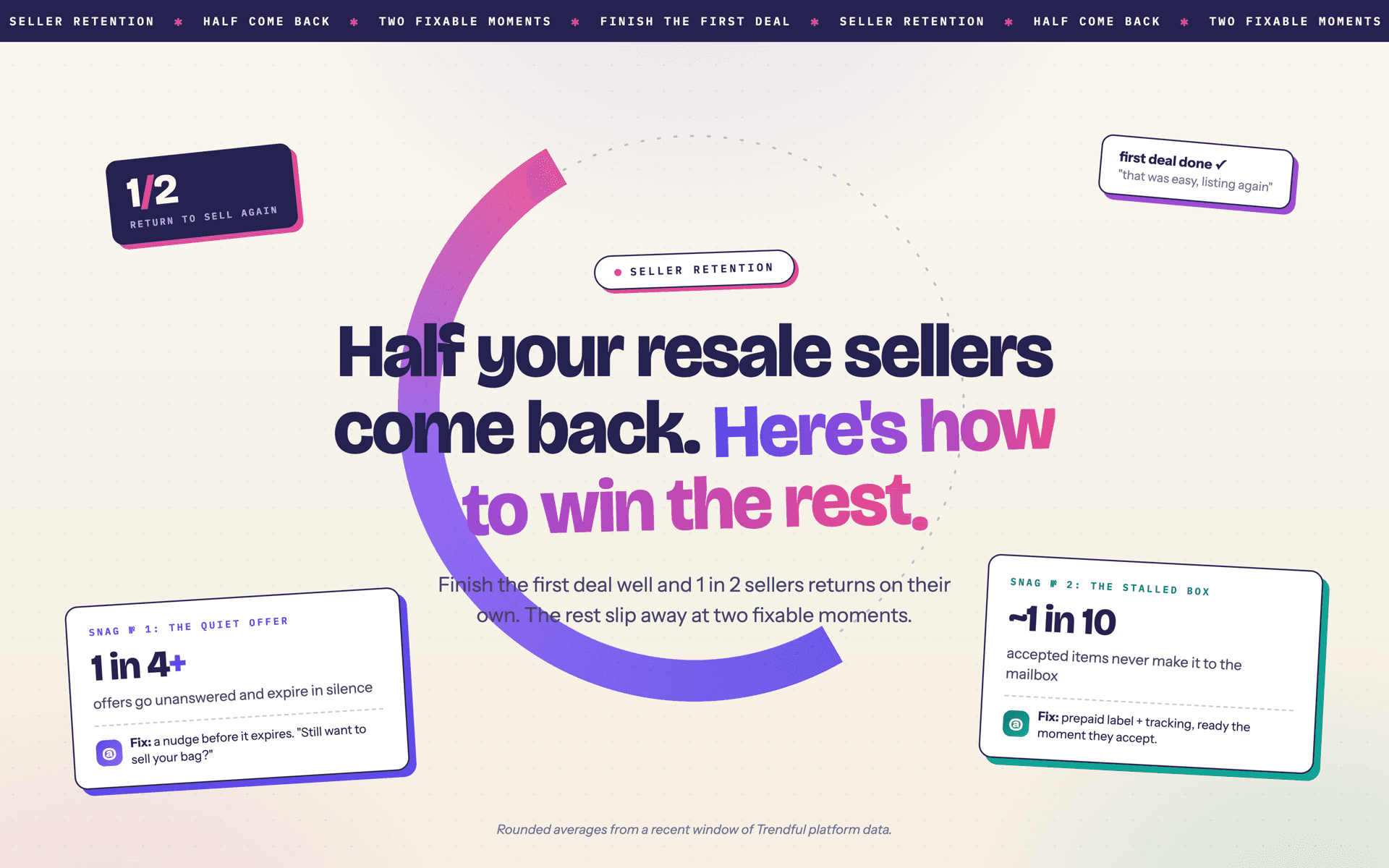
Here is a number worth celebrating: when a seller finishes a deal with you, about one in two comes back to sell again. Half your sellers reorder themselves, at almost no cost to you. That is a strong starting point, and better than most merchants realize.
Now the other half. They sell once and you never hear from them again, and that is the expensive part, because you paid to win them the first time. The good news is that most of those sellers are not walking away upset. They slip away at two simple moments, and both come down to the same fix: clear, timely communication. This is a plain look at where you lose sellers and how to bring more of them back.
Winning a seller once is the expensive part
The first sale is the hard one. A new seller found you, trusted you with their item, and waited to get paid, and all of that took real effort and real marketing spend to earn. Every sale after that is cheaper. They already know how you work, they already trust you, and getting them back costs you almost nothing.
That is why a seller who only sells once is so pricey. If half the sellers you fought to win never return, you are refilling your seller list every month just to stay even, paying again for supply you already had. When your customers are your suppliers, keeping them is not a nice-to-have. It is how you stock your shelves. If that idea is new, our piece on why your own customers are your best suppliers makes the full case.
So the real question is not "how do I find more sellers." It is "where am I losing the ones I already have," and the answer is refreshingly specific.
The two moments you lose sellers
A deal can stall in a lot of places on paper, but two of them account for most of the sellers who quietly disappear. Both happen early, before the item ever reaches you, which is exactly why they are easy to miss. You never see the seller who was going to come back, because they never finished the first deal.
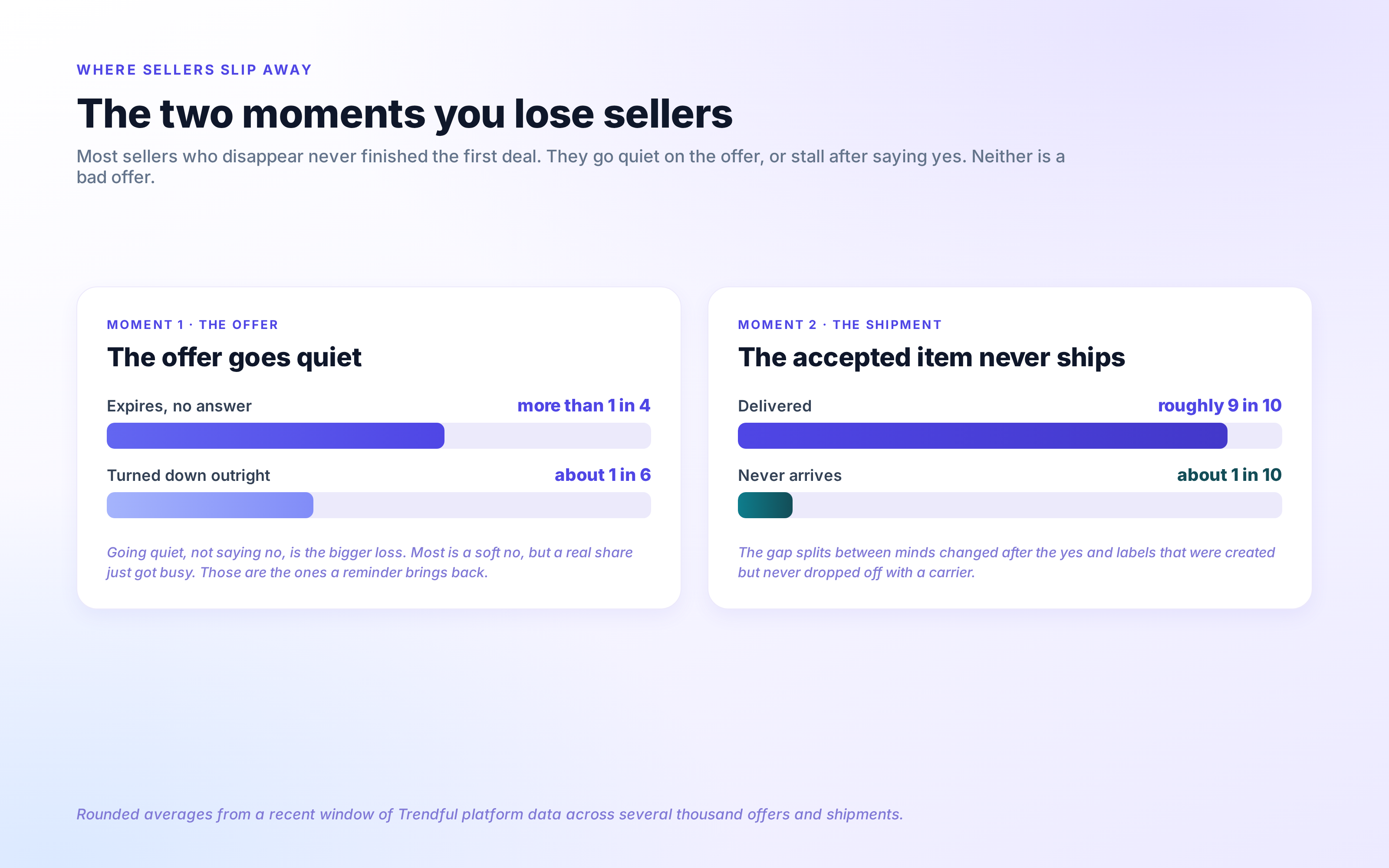
The offer goes quiet. Look at a recent batch of offers on Trendful and more than one in four simply expire, with the seller never clicking accept or decline. Only about one in six are turned down outright. So the most common way an offer ends is not a no, it is silence. Be honest about that silence, because it matters: a lot of it is a soft no. The seller looked, decided the number was not for them, and did not bother to reply. You will not win all of those back, and chasing them with pushy follow-ups just teaches sellers to ignore you. But a real share of that silence is winnable. The seller got busy, forgot, or was waiting to hear from another shop. Those are the sellers a friendly reminder brings back.
The item never ships. The second drop-off happens after the yes. Once a seller accepts and gets a shipping label, about nine in ten of those items arrive. The other one in ten never make it, and that is the gap. It comes in two shapes. The bigger share is sellers who had second thoughts after accepting, or offers the merchant pulled back, in the days between the yes and the box actually moving. The smaller share is sellers who got the label and then stalled, the prepaid label sitting in their inbox while life got in the way.
Neither of these is about a bad offer. In fact, once a seller has a number in front of them, saying yes is the fastest step in the whole deal, most of them accepting within about 15 hours. The sellers you are losing are not rejecting you. They are drifting, and drift is something you can fix.
Get the offer out fast, then follow up
The strongest move against the quiet offer is not a follow-up at all. It is simply getting your offer out faster in the first place.
Speed is the offer. A seller deciding whether to part with a bag is weighing you against the shop down the street and against just keeping it, and that interest fades quickly. Across the platform the typical offer takes about two days to go out, while the fastest merchants answer in under two hours. That gap is the difference between catching a seller while they are still thinking about it and reaching them after they have moved on.
And quoting is not complicated. Most merchants just price the item and send the number themselves, right from a simple form in their admin, and that hands-on quoting is how most of the platform works. If your volume gets high enough that pricing every item by hand slows you down, you can switch on instant offers to have the number worked out and sent automatically, but that is an option, not the default. Either way, the goal is the same: get a fair number in front of the seller while their interest is still warm. Our guide to sending and receiving offers walks through it.
For the offers that still go quiet, the fix is a gentle nudge that lands while the offer is still good, and here is the practical news for smaller shops: offer reminders are now available on Pro plans, after being opened up beyond the higher tiers. Turn them on and a seller who went silent gets a friendly, on-brand reminder before their offer runs out, one tap on the shoulder rather than a pile of emails. It brings back the busy-and-forgot sellers without bothering the ones who already decided no.
It helps to know that an offer does not stay open forever. You choose how long an offer lasts, usually somewhere between one and two weeks, and an offer that goes unanswered is marked expired once that window passes. A reminder timed to land partway through reaches the seller while the offer is still live. And letting an offer expire is not a loss, especially on higher-value pieces: if a seller comes back later, you can simply send a fresh offer at today's price. That protects you when the market has moved, so an offer that expires and gets re-sent works in your favor.
Keep the accepted item moving
The gap between a seller saying yes and the item arriving is really a gap of time. The longer it takes to turn that yes into a moving package, the more room there is for a mind to change or for the label to get buried in an inbox.
The first defense is the same as at the offer stage: speed. Turn an accepted offer into a shipping label right away, ideally the same day, so the seller acts while the decision is fresh. A prepaid label with live tracking quietly does a second job, too, because it turns a vague commitment into a clear next step and keeps the seller oriented on where their item and their money are. We dug into why that stretch is so fragile in our piece on how resale merchants handle inbound shipping.
For the seller who accepted, got the label, and then stalled, the answer is the same thing that rescues the quiet offer: an automatic reminder. A shipping reminder nudges a seller who has a label but has not shipped yet, on a schedule you set, so the item that would have been forgotten gets dropped off instead. It is the least glamorous email you will ever send and one of the most valuable, because it saves a deal the seller already agreed to.
Clear communication is what actually keeps sellers
Step back and the pattern is the same at every stage: sellers do not leave because they are upset, they leave because they lose the thread. So the real fix, underneath the speed and the reminders, is communication that keeps the seller in the loop without you having to remember to send anything. On Trendful that runs on its own, and it is worth being clear about what "good" looks like here, because sending an email is not the same as sending a helpful one.
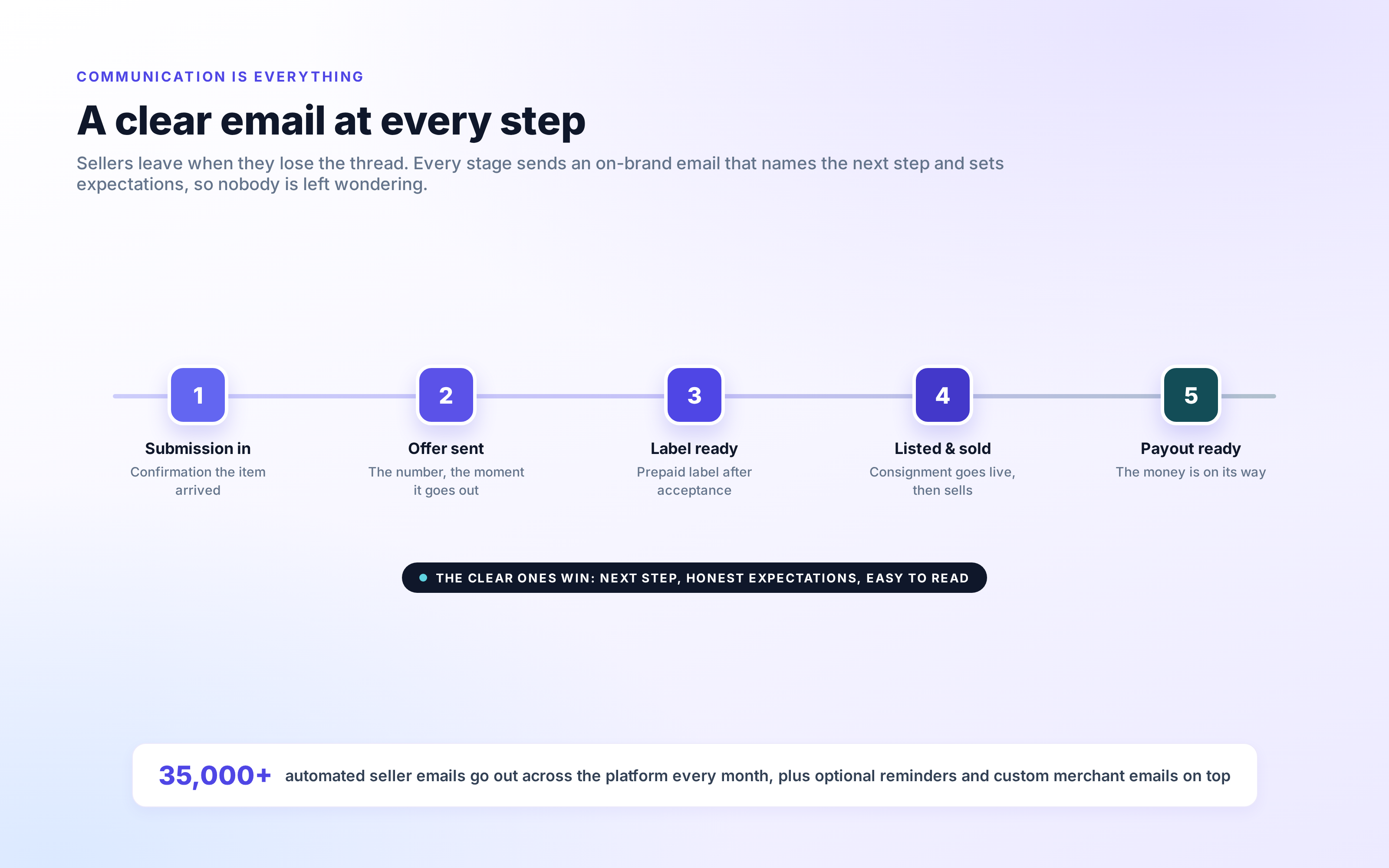
Every stage of a deal sends the seller an automatic, on-brand email: a note confirming the item came in, the offer when it goes out, a label-ready message after they accept, a heads-up when a consignment item is listed, an item-sold alert, and a payout note when the money moves. Across the platform that adds up to more than 35,000 of these emails a month, none of which depend on a busy owner remembering to follow up.
But the merchants who keep the most sellers are not just the ones whose emails go out. They are the ones whose emails are clear. A few habits make the difference:
- Spell out the next step. Every message should answer the one question the seller actually has, which is "what happens now." "Here is your prepaid label, drop it off within a week" beats a bare label attachment every time. When the seller always knows what to do next, they do it.
- Be upfront that an offer can change. Say plainly, before the item ships, that your offer is based on the photos and the condition the seller described, and that it can be revised or re-sent if the item arrives different or if the offer expires and prices have moved. Setting that expectation early turns a potential nasty surprise into something the seller was told to expect, and that honesty is exactly what builds trust.
- Keep it easy to read. Short, plain, friendly messages get read and acted on. A seller who understands your process is a seller who trusts it, and a seller who trusts it is a seller who comes back.
Communication is not the soft part of the job. It is the difference between a seller who feels looked after and one who quietly drifts off, and it is the cheapest retention tool you have. The same care matters most when the answer is no: a decline explained clearly and handled gracefully is often what decides whether a seller ever submits again, which is the whole subject of our guide to handling declined items.
The payoff: grow the half that already comes back
Come back to that opening number, because it is the whole point. When a seller finishes the experience, about one in two comes back to sell again. That is already a strong base, and every drop-off you close at the offer and shipping stage adds to it. The difference between a shop that scrambles for inventory every month and one whose supply keeps building is not a secret channel. It is holding onto more of the sellers you already win.
The timing even tells you when to reach out. The typical gap between a seller's first and second sale is about five weeks, so this is a patient relationship, not an impulse rebuy. Treat that as a plan: stay in friendly contact around the one-month mark and you are there right when the next item is on their mind. Go quiet and you hand that item to whoever asks first. And a returning seller rarely stops at one more item, which is exactly how a supply base grows instead of resetting to zero every month. Store credit pours fuel on all of this, since a seller paid in credit is already your next buyer.
The takeaway
Half your sellers coming back is a good number, not a bad one, and it is one you can grow. The sellers you lose mostly slip away at two spots: the offer that goes quiet, where more than one in four expire with no answer, and the item that never ships, where about one in ten accepted items never arrive. Neither is rejection. It is drift, and drift responds to speed, a well-timed reminder, and above all clear communication that tells the seller what happens next and sets honest expectations. Do that, and more of the sellers you already won come back on their own. The cheapest inventory you will ever source is the seller you have already paid once, treated well, and kept in the loop.
Frequently asked questions
Do most resale sellers come back after selling once? About half do. On Trendful, when a seller finishes a deal and accepts an offer, roughly one in two comes back to sell again on their own. The sellers who never finished that first deal, because they were ghosted or turned away, come back at a much lower rate, which is why the early steps matter so much.
Why do the other sellers not come back? Usually not because of a bad offer. The two biggest drop-offs are offers that go quiet, where more than one in four expire without the seller deciding, and accepted items that never ship, about one in ten. Sellers drift away when they lose track of what is happening, so faster offers and clear, automatic follow-ups bring more of them back.
How do offer reminders help? When a seller goes quiet on an offer, an automatic reminder before it expires catches the ones who were simply busy or forgot, without pestering the ones who already said no in their head. Offer reminders are now available on Pro plans, and they send on a schedule you set so the nudge lands while the offer is still good.
How long should an offer stay open? You decide, and most merchants land somewhere between one and two weeks. An unanswered offer is marked expired once that window passes. For higher-value items, letting an old offer lapse and sending a fresh one at today's price protects your margin, so an offer that expires and gets re-sent works in your favor.
When should I follow up with a past seller? The typical gap between a seller's first and second sale is about five weeks, so the natural time to reach back out is around the one-month mark. Getting in touch then, rather than the day after a payout, tends to land right when the next item is on their mind.
Get started
Want to see offer reminders, hands-on quoting, and the automatic seller emails that keep your supply coming back? Create an account and pick the plan that fits how you work today, or book a demo and we will walk you through it.
Keep reading
- Anatomy of a submission: from customer photo to payout
Follow one resale item end to end, from the first customer photo to the final payout. Here is how selling to a resale store actually…
- What is C2B resale acquisition? The model powering modern resale
C2B (customer-to-business) is the transaction model behind every resale business: your customers sell to you, and you resell. Here is how…
- Buyout vs consignment vs trade-in vs store credit: the complete comparison
Buyout, consignment, trade-in, and store credit explained for resale merchants, with what we actually see across a recent sample of ~10K…