How resale merchants handle inbound shipping (and what sellers expect in 2026)

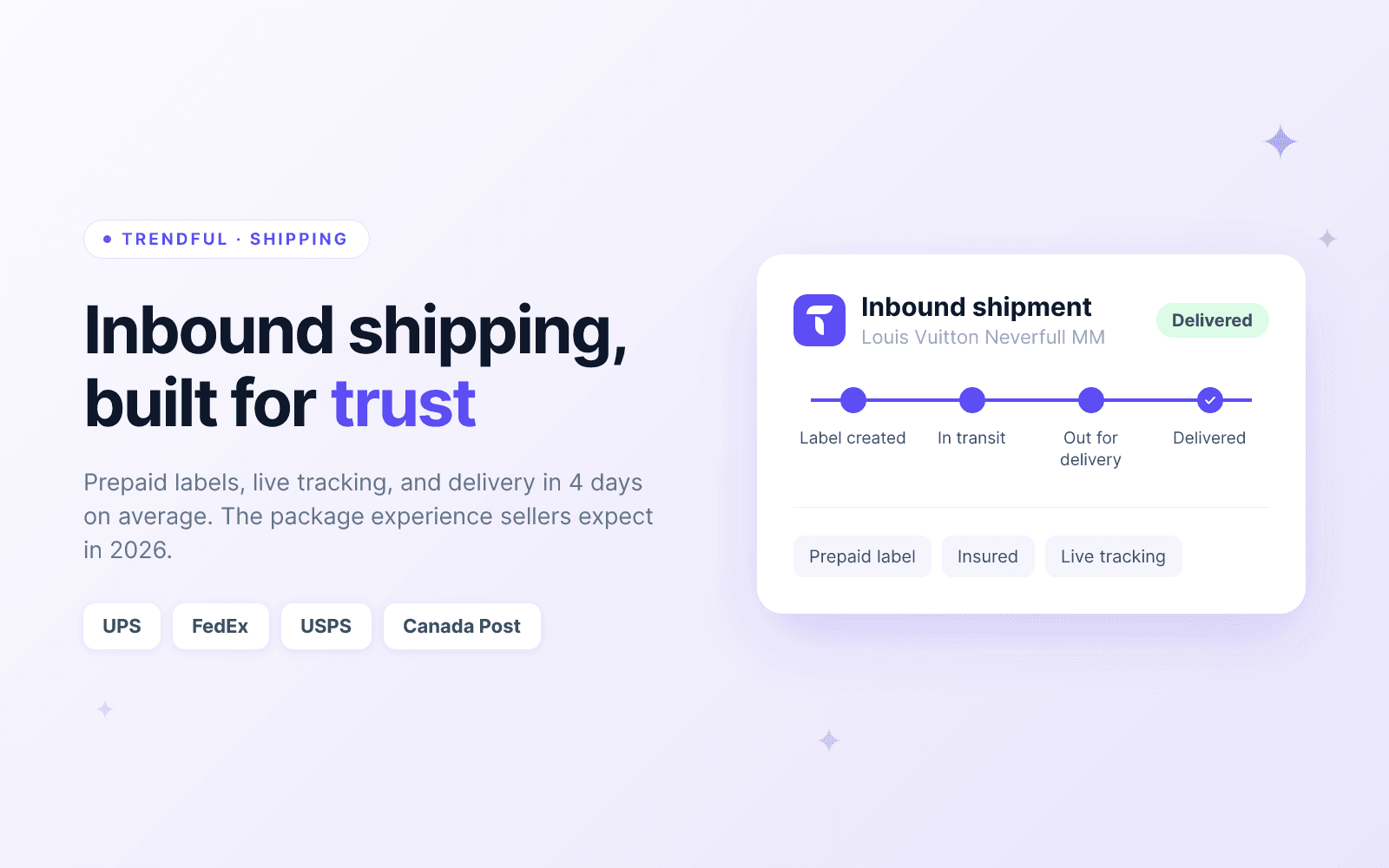
The moment a seller drops a package at the counter, they are trusting a $2,300 item (the average resale value on Trendful) to a carrier and to a store they may have never visited. Everything before that, the submission, the quote, the yes, was words on a screen.
Shipping is where the relationship becomes real. How it goes decides whether that seller ever sends you a second item. So it is worth getting right, whether you buy items outright, take them on consignment, or offer trade-in and store credit.
What bad inbound shipping costs merchants
When intake is clunky, you feel it everywhere:
- Sellers accept a quote, then ghost when shipping feels complicated or sketchy.
- "Where is my item?" emails eat the team's week.
- No tracking trail means no proof when something goes wrong, and disputes get ugly.
- A lost first package usually means a lost seller forever.
None of that is about boxes and tape. It is about trust, which is expensive to rebuild once it cracks.
What sellers expect in 2026
Amazon set the bar for every package experience, including the ones going the other direction. The baseline now is simple: a prepaid label waiting in the inbox, tracking both sides can see without asking, and a notification when the item arrives.
Anything less reads as amateur hour, and sellers of $2,300 items do not do amateur hour twice.
How it works on Trendful
Trendful builds the whole shipping flow into the offer, so the trust signals sellers expect are on by default.
- A label is generated straight from the offer and emailed to the seller automatically.
- Self-serve option: you can let sellers generate their own label directly from the resale app, no back-and-forth needed.
- Live tracking, shown right in the offer. You see the status in admin, and the seller sees the same tracking in the resale app, so nobody has to ask.
- An automatic delivered notification fires the moment the package arrives.
Here is what that live tracking looks like inside a single offer. The carrier, the service level, the rate, and every scan sit together on one timeline.
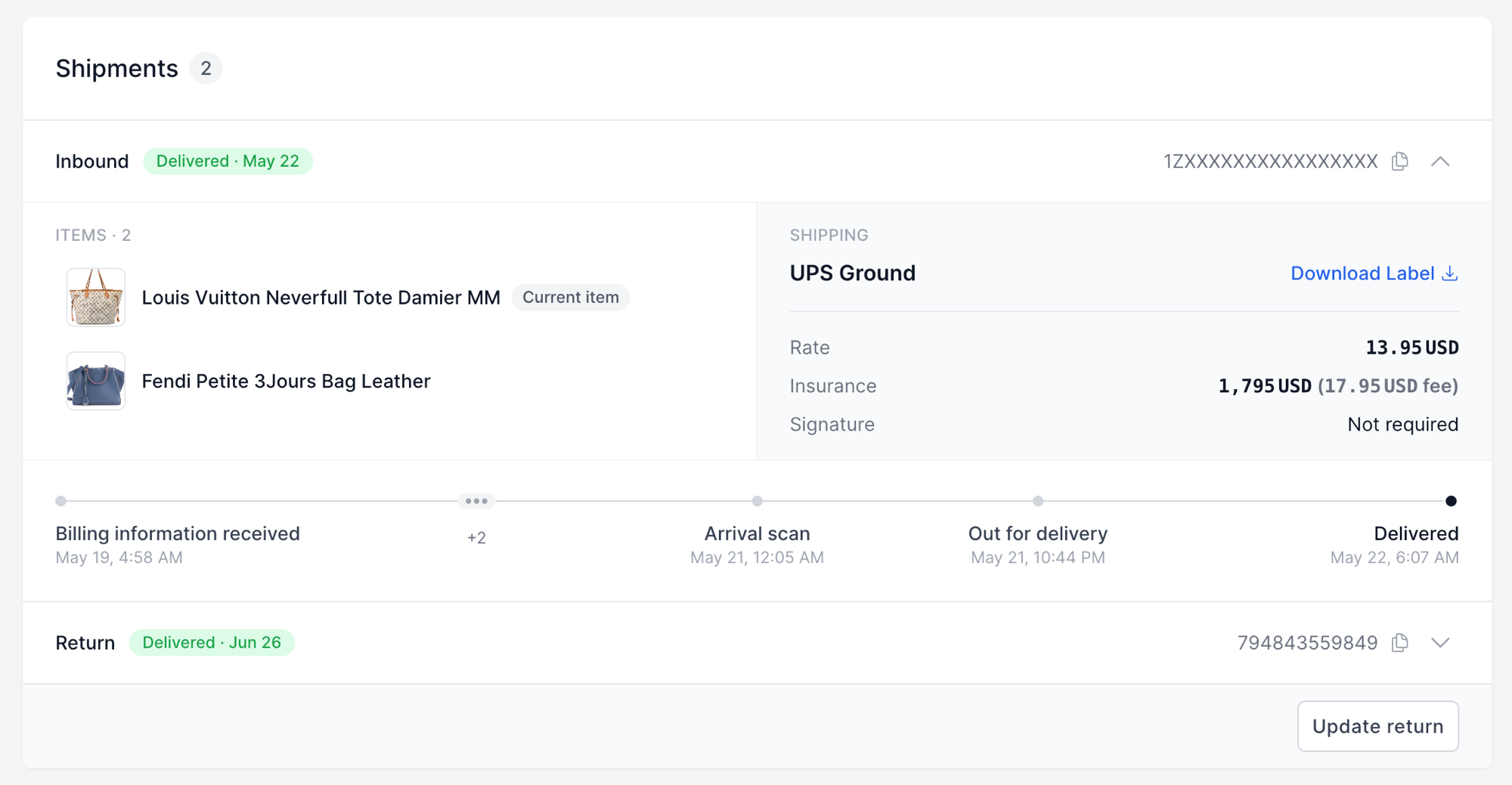
Everything lives on the offer: customer info, the quote, the timeline, tracking, and the communication thread. When a seller asks "did you get my bag?", the answer is one search away, not an inbox excavation. And when the box lands, the status flips to delivered on its own.
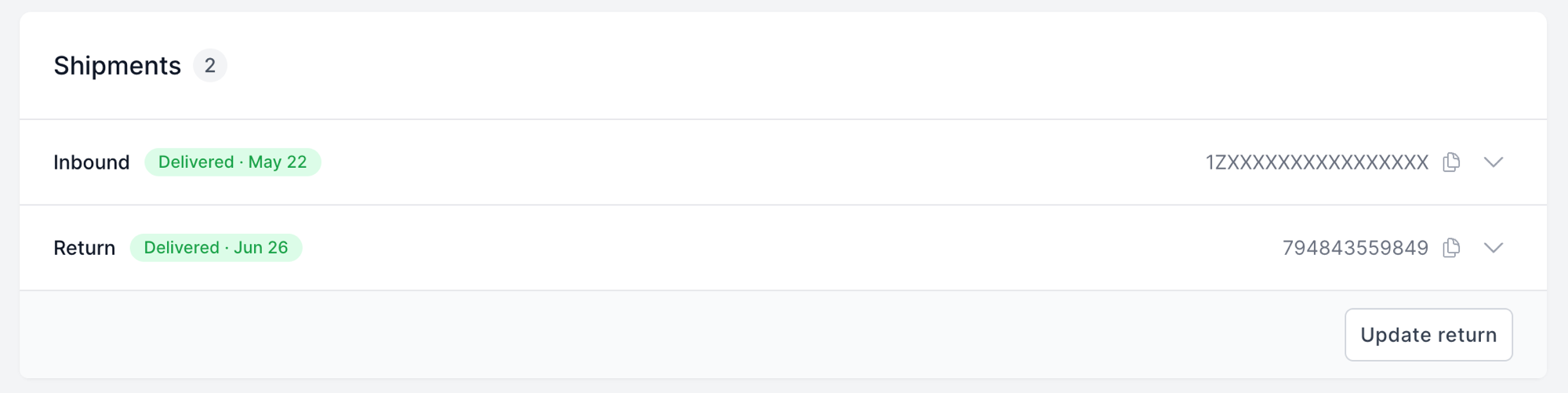
If you are new to running quotes and labels from one place, our guide on how to send and receive quotes walks through the offer workflow step by step.
Carriers, insurance, and who is liable
Good intake also means control over how items travel, and Trendful gives you that without a logistics degree.
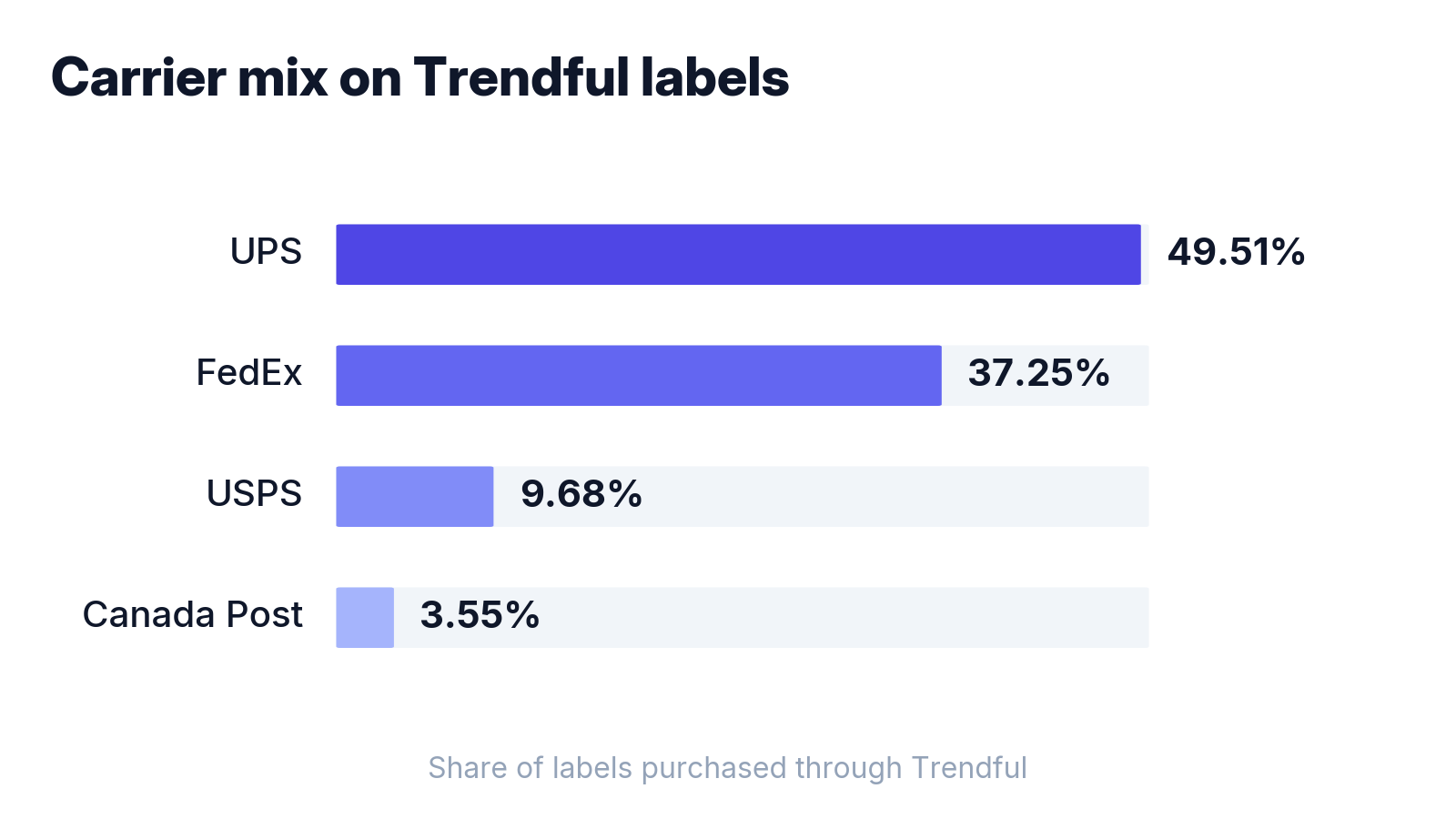
You choose which carriers sellers can use for self-serve labels, by region: FedEx, UPS, and USPS in the US, Canada Post in Canada. Insurance is automated with three modes. You can always include insurance, never include it, or let the seller decide. Both the label cost and, when it applies, the insurance cost can be deducted from the seller's payout at the end, all handled inside Trendful, so there is nothing to invoice or chase.
This matters more than it sounds. An insured package protects the seller and removes liability from you for a lost box at the same time. "Who is responsible if my item gets lost in the mail?" is one of the scariest questions in resale, and insurance answers it before it gets asked. That is peace of mind on both sides of the transaction, not a way for anyone to dodge responsibility.
The numbers behind the network
Because shipping runs through one platform, we can see how inbound resale actually moves:
- Around 550 labels are purchased through Trendful every month, most of them covering packages that carry multiple items.
- The average label costs $16.03, using Trendful's negotiated USPS, UPS, FedEx, and Canada Post accounts. You do not need your own carrier account to start.
- Average delivery is 4 days from label to doorstep, and that is on the economical default. Self-serve labels pick the cheapest service level automatically, which is what drives the 4-day average.
- Roughly 9 in 10 tracked shipments are delivered to the merchant once a seller accepts an offer and gets a label. Acceptance almost always becomes an item in hand.
Here is how those labels split across carriers:
Shipping notifications are just one slice of the 35,000+ automated emails Trendful sends every month, so sellers stay informed without your team lifting a finger. These are platform-wide figures, aggregated across merchants running every offer model. For more on those negotiated rates, see our post on Trendful's exclusive UPS shipping discounts.
Built for how you actually ship
The self-serve flow is the default, but you are never boxed in.
- From admin, you can create a label on any service level the carrier offers: next-day, air, or ground, with full rate detail shown before you buy. Need a $12,000 watch overnight and insured? That is two clicks.
- Enterprise merchants connect their own FedEx and UPS accounts and keep their negotiated rates.
- Shipping with a carrier outside the integrations? Add the tracking number manually and Trendful still tracks it and fires the delivered notification.
- Multi-item packages are supported, since sellers rarely send one thing at a time.
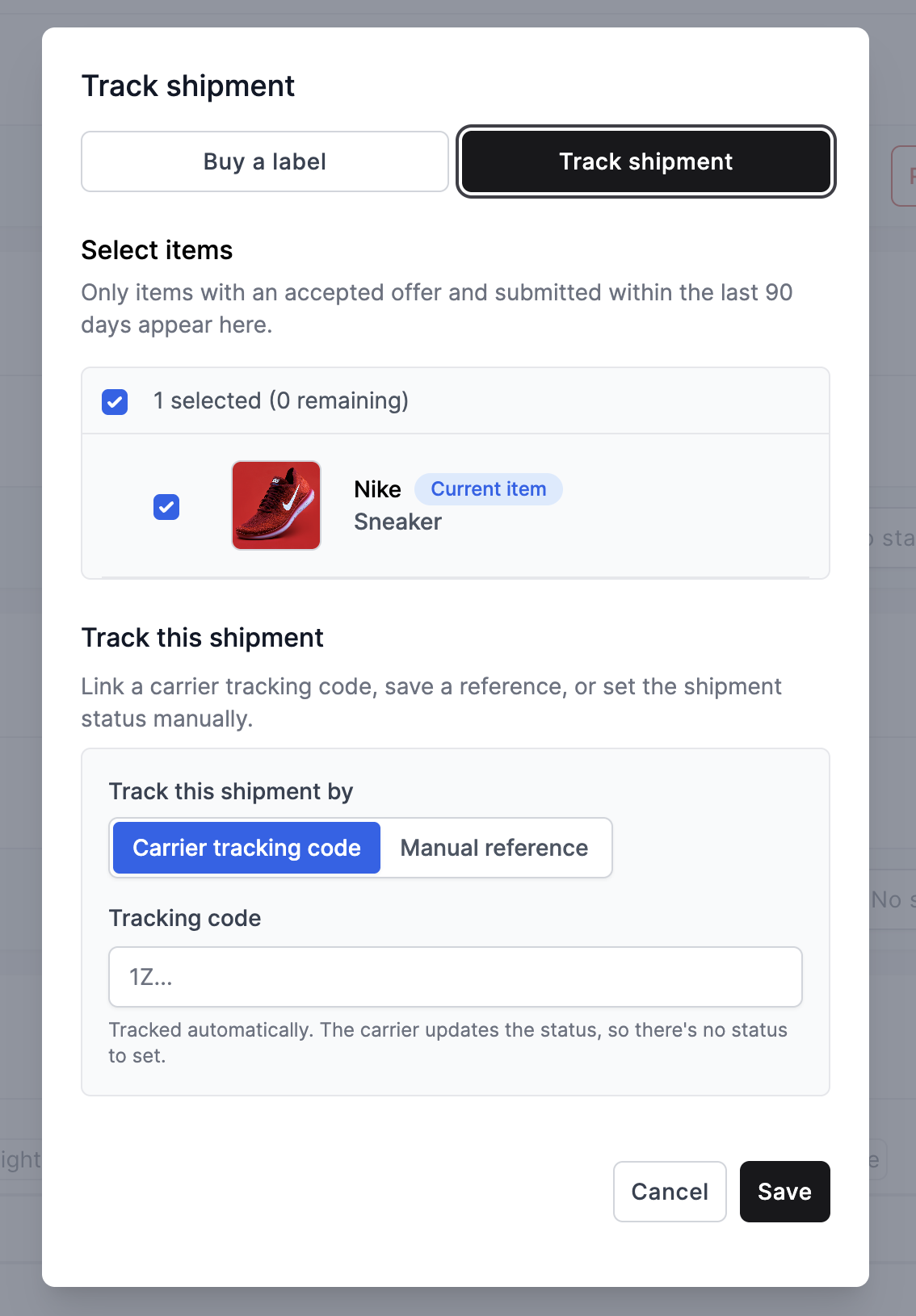
The bigger point: this removes the shipping burden that keeps merchants local. With labels, tracking, and insurance handled from anywhere, a store that used to accept only in-person drop-offs can start acquiring inventory nationally.
Shipping is the trust moment
Shipping is not logistics overhead. It is the single biggest trust signal in the acquisition relationship, and trust is what brings sellers back. Among sellers who accept an offer, 1 in 2 come back to sell again.
Get that first package right, and you are not just receiving an item. You are earning the next one.
Frequently asked questions
Who pays for shipping when selling to a resale store? Typically the merchant provides a prepaid label. It costs a little up front, but it removes a major reason sellers abandon an accepted quote, so it converts far better than asking the seller to arrange shipping themselves.
How long does it take to ship an item to a resale store? About 4 days on average via Trendful labels on the standard service level. Merchants can select faster services, including next-day, directly from admin when an item is time sensitive.
Do I need my own carrier account to offer prepaid labels? No. Trendful provides negotiated USPS, UPS, FedEx, and Canada Post rates out of the box, so you can start without any carrier account. Enterprise merchants can bring their own FedEx and UPS accounts if they prefer.
What happens if a package is lost on the way to a resale store? Insurance covers it. Merchants can auto-insure every shipment, never insure, or let the seller decide. Both the label cost and the insurance cost can be deducted from the payout inside Trendful, and the coverage protects both the seller and the merchant.
Get started
Want to see the offer view, live tracking, and label flow in action? Create an account and pick the plan that fits how you operate today, or book a demo and we will walk you through it.
Keep reading
- Anatomy of a submission: from customer photo to payout
Follow one resale item end to end, from the first customer photo to the final payout. Here is how selling to a resale store actually…
- What is C2B resale acquisition? The model powering modern resale
C2B (customer-to-business) is the transaction model behind every resale business: your customers sell to you, and you resell. Here is how…
- Buyout vs consignment vs trade-in vs store credit: the complete comparison
Buyout, consignment, trade-in, and store credit explained for resale merchants, with what we actually see across a recent sample of ~10K…