Handling declined items: how resale merchants should run returns

Declining an item is a normal Tuesday for a resale merchant. Sending it back should be too.
Yet returns are where most operations start to improvise: an apology email, a label bought on someone's personal card, a package nobody tracks, and a seller who never hears from the store again. The return is the part that decides whether that seller ever submits to you again, whether you buy items outright, take them on consignment, or run trade-in and store credit.
Why items go back, and why that is healthy
Items go back for three completely normal reasons:
- The item did not pass authentication.
- The condition on arrival does not match what the seller submitted.
- The seller changed their mind and asked for the item back before the sale completed.
None of these are failures. A store that declines nothing is a store with an authenticity problem. Returns are proof that your bar is real, and sellers of high-value goods respect a store with standards. The skill is not avoiding declines. It is running the return without losing the person on the other end.
Why sloppy returns quietly kill the relationship
A return handled badly does more damage than the decline itself.
- The seller's item is in limbo, and silence reads as "they lost my bag."
- No tracking means no proof the item was ever sent back, which is exactly how disputes and chargebacks begin.
- A messy decline guarantees the seller never submits again, and returning sellers are a big share of where your future inventory comes from.
A return handled well does the opposite. It turns "they rejected my bag" into "they were professional about it, I will send the next one." That is the whole game.
How returns work on Trendful
The first structural point to understand: returns are merchant-triggered from admin, not self-serve. A return is a decision, whether it is a failed authentication, a condition mismatch, or honoring a change of mind, so it starts on the merchant side. That is deliberate.
It also matters who does the authentication. Trendful is the workflow layer: items ship directly to the merchant, and Trendful never takes possession of inventory or provides authentication services. Instead, the merchant's authentication step, whether a third-party service such as Real Authentication or Entrupy or the merchant's own in-house expertise, slots directly into the flow.
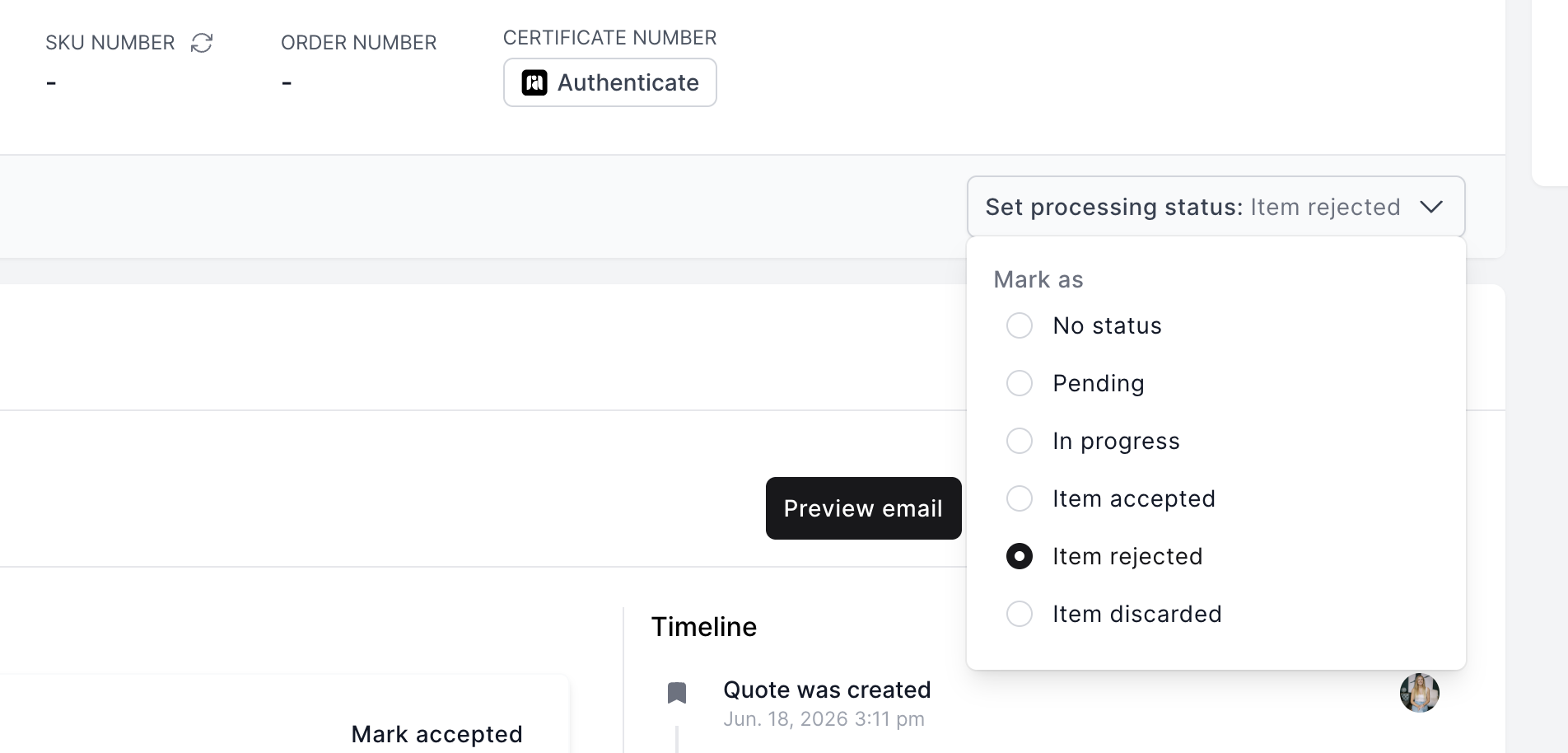
When an item does not pass, the sequence is simple. The merchant sets the item's processing status to rejected and can attach notes to the item, which becomes your documentation trail if anyone questions the decision later.
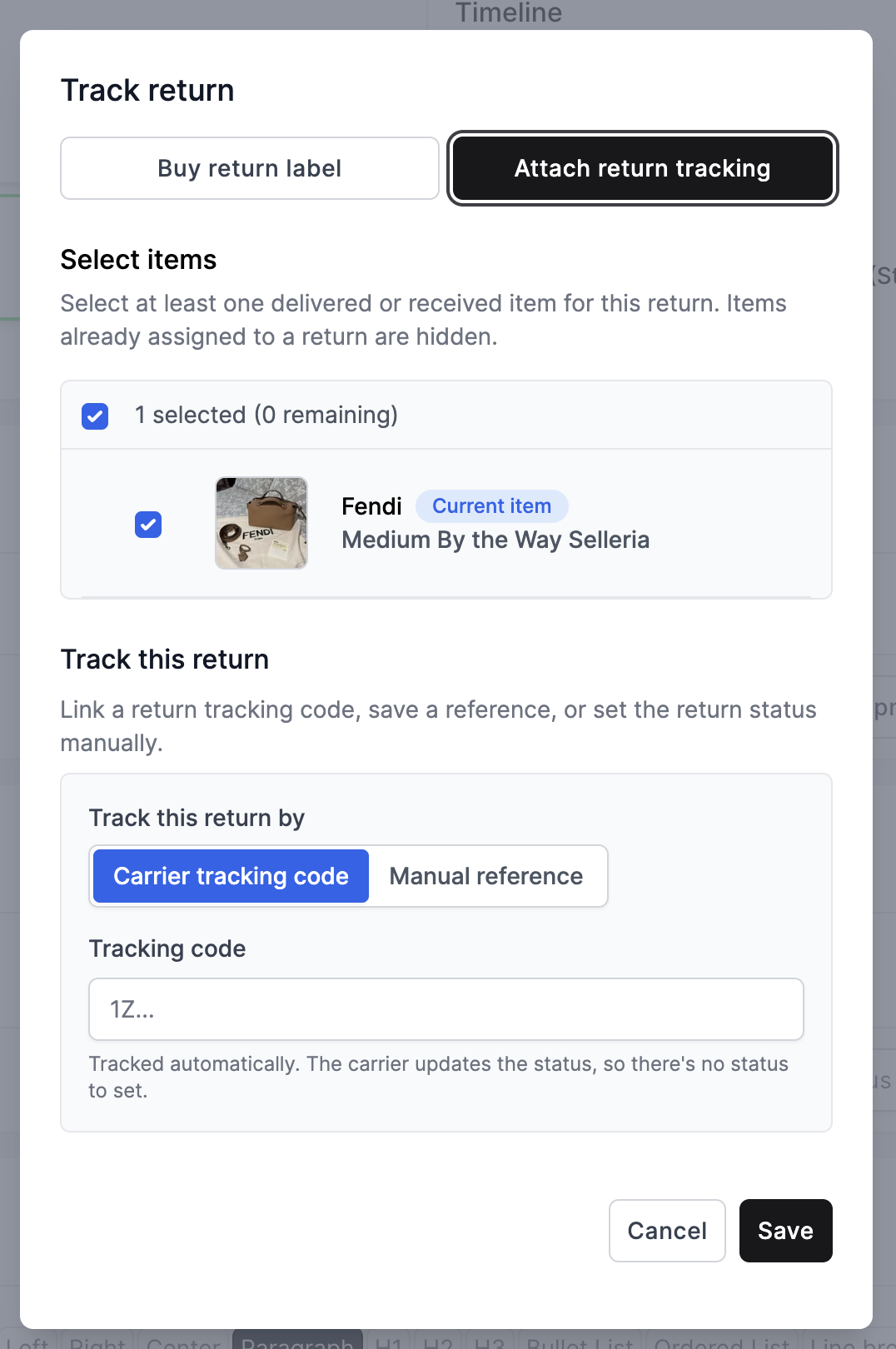
From there, the return is created right from the offer, the same way you would create any shipment. You can buy a return label or attach your own tracking, and you pick which delivered or received items belong to the return.
From that point the return behaves like a first-class shipment:
- Any service level the carrier offers, ground, air, or expedited, with full rate detail shown before you buy.
- Insurance is your call, per return. A declined item is still the seller's property while it travels, so an $8,000 bag going back should probably travel insured.
- Consolidate multiple items into one return package. One seller with three declined items becomes one box and one label, not three trips.
- Label, tracking, and the delivered notification work exactly like inbound shipments. The seller gets notified, both sides see the same tracking, and everything is logged on the offer thread.
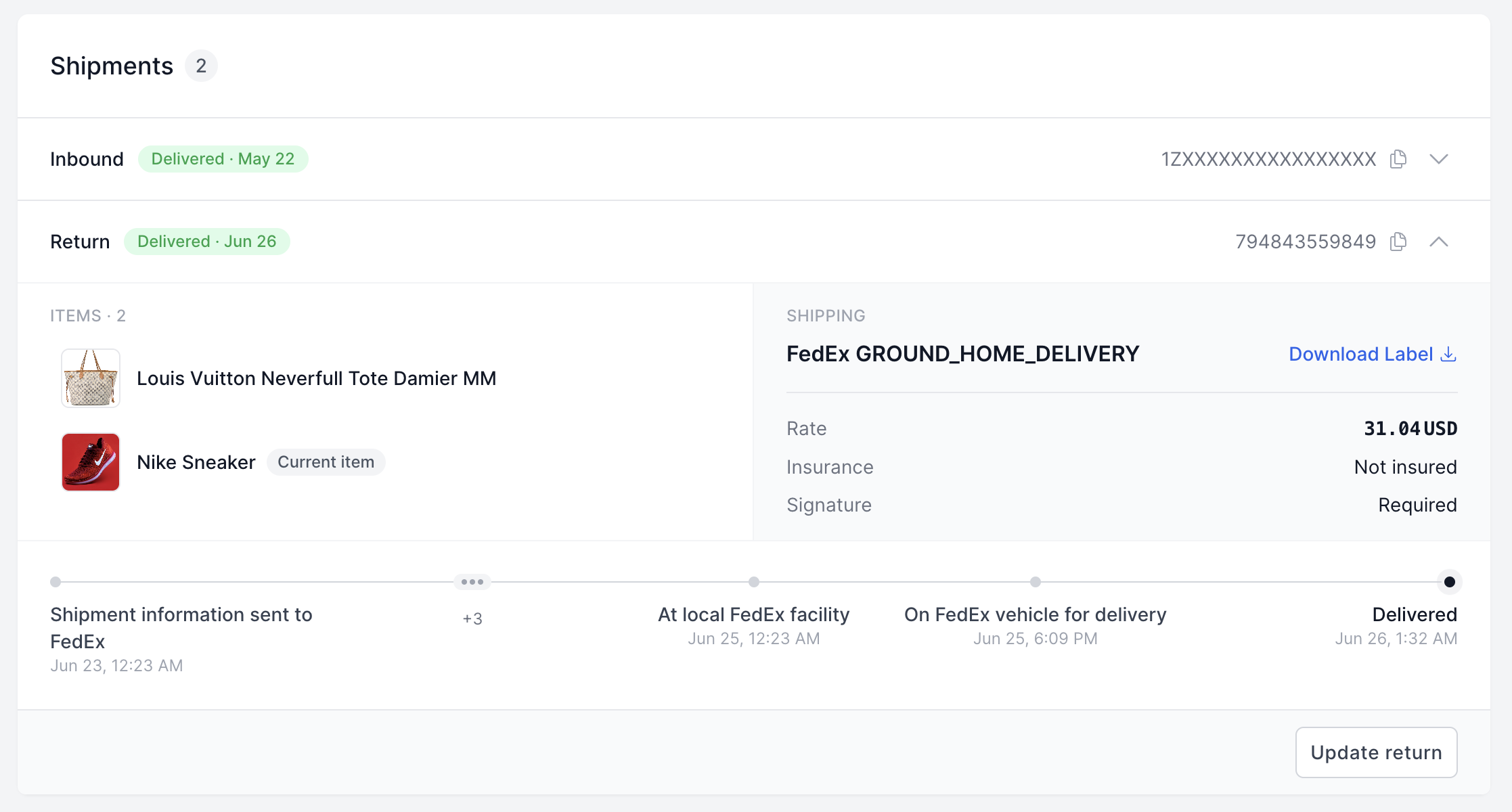
Because the whole thing lives on the offer, the return is never a mystery. The status, the tracking, and the reason all sit in one place next to the original quote. If a seller asks where their item is, the answer is one search away.
Building a return policy worth publishing
The tooling handles the mechanics. The policy is on you, and a good one is short and honest. A few patterns worth adopting:
- Decide who pays for return shipping, and publish it. A common pattern is the merchant pays when they decline, and seller-pays is worth discussing for a change of mind. Whatever you choose, say it up front.
- Set a timeline expectation for sending declined items back, and hold yourself to it. A predictable return window beats a fast one you cannot repeat.
- Communicate the decline reason honestly but kindly. A short, templated decline message beats silence every time. This is also where the notes you attached to the item pay off.
- Insure high-value returns. The item belongs to the seller until it is home, and insurance answers "what if it gets lost" before the question is ever asked.
- Keep the paper trail. The offer thread, with its tracking and notes, is your dispute protection. Treat it as the record it is.
The decline is not the end
A decline only ends the seller relationship if the return makes it so. A tracked, insured, well-communicated return is the difference between a seller who feels dropped and one who trusts your standards enough to come back. The same tooling that runs your quotes and offers runs the return, so getting it right is one more reason the next item comes to you.
Frequently asked questions
What happens if a resale store declines my item? You send it back. On Trendful, you create a tracked return directly from the offer, the seller is notified automatically, and both sides can follow the same tracking until the item is delivered back to them.
Who pays for return shipping when an item is declined? It depends on the store's policy. A common pattern is that the merchant covers return shipping when they decline an item, while a change of mind may be handled differently. Each merchant configures and publishes its own policy, so it is worth checking before you submit.
Can I get my item back if I change my mind about selling it? Yes. As long as the sale has not completed, the merchant can trigger a return from the offer and send the item back with the same tracking and notifications as any other return.
Is my item insured on the way back? It can be. Merchants can add insurance to any return, and it is recommended for high-value items, since the piece is still your property in transit.
Get started
Want to see the offer view, the return flow, and live tracking in action? Create an account and pick the plan that fits how you operate today, or book a demo and we will walk you through it.
Keep reading
- How to start a resale business: the complete playbook
Secondhand is on track for about $393 billion by 2030 and growing twice as fast as apparel retail. The opportunity is not the hard part…
- Half your resale sellers come back. Here's how to win the rest
About half the sellers you win come back to sell to you again, all on their own. The other half slip away at two simple moments. Here is…
- Anatomy of a submission: from customer photo to payout
Follow one resale item end to end, from the first customer photo to the final payout. Here is how selling to a resale store actually…