Authentication is not optional: how to authenticate pre-owned luxury

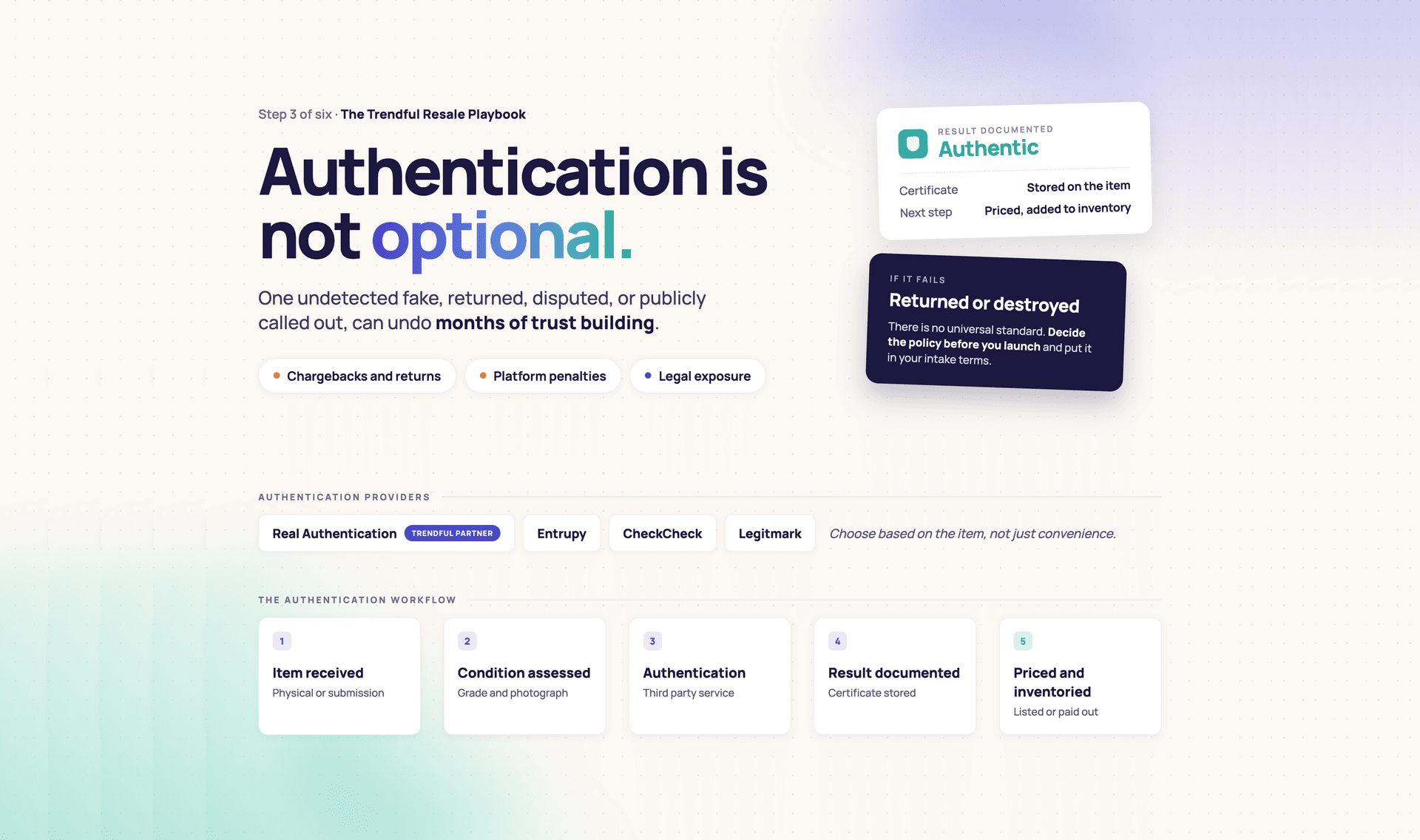
Authentication is not optional. It is the operational foundation that everything else rests on, and one undetected fake, returned, disputed, or publicly called out, can undo months of trust building.
This is step three of the Resale Playbook, the six step series we publish one Thursday at a time. Step two was about where inventory comes from. This one is about the step between the item arriving and the item going up for sale.
It is also the step most often treated as a back office concern. It is not one. It is a customer promise, and the consequences when it fails land on the business, not on the back office.
Why it's non-negotiable
Three things go wrong when authentication fails, and they compound.
Chargebacks and returns. Buyers who receive inauthentic items dispute the transaction. You absorb the cost, and you also absorb the logistics of getting the item back, which is worth having a returns process for before you need one.
Platform penalties. Marketplaces like eBay and Poshmark can suspend accounts for authenticity violations.
Legal exposure. In some jurisdictions, knowingly selling counterfeit goods carries criminal liability.
For luxury categories in particular, a single incident can end a business before it gets off the ground. Build the process before your first incident.
Authentication providers
| Provider | Categories | Pricing | Turnaround |
|---|---|---|---|
| Real Authentication (Trendful partner) | Handbags, shoes, accessories, apparel | From $30 | 24 hr guaranteed |
| Entrupy | Handbags, footwear, apparel | $139 to $1,049/mo | AI and app based |
| CheckCheck | Sneakers, luxury, collectibles | Credit bundles | Dual expert review |
| Legitmark | Footwear, bags, apparel, accessories, jewelry | $10 per footwear item, $25 per luxury or handbag item | About 3 hr, custom for business accounts |
It is not unusual to use more than one provider. A shop handling luxury handbags and sneakers might use Real Authentication for handbags and CheckCheck for sneakers. Choose based on the item, not just convenience.
The shape of the pricing matters as much as the number. Real Authentication and Legitmark charge per item, so your cost scales with volume and nothing is wasted in a slow month. Entrupy is a monthly subscription with tokens included, which gets cheaper per authentication the more you run and more expensive the less you do. CheckCheck sells credit bundles, which sits between the two. Our earlier deep dive on Entrupy and Real Authentication compares the AI driven and expert review approaches in more detail.
Real Authentication is a Trendful partner, and Trendful clients get up to 35% off any authentication service with the code TRENDFUL.
What rarely clears the bar is building authentication in house. It is expensive, slow to stand up, and heavy on liability, and the expertise does not transfer between categories: being right about handbags does not make you right about sneakers. This is one more reason the category you choose first sets your cost structure.
Some resale businesses build the cost of authentication into the seller's final payout, so the seller receives the agreed amount minus the authentication fee. However you handle it, make sure your offer structure accounts for it. Authentication is not a free step.
Authentication workflow
Authentication belongs in intake as a defined step rather than an afterthought. Five stages, in order:
- Item received. Physical or submission. For most merchants this starts with the seller shipping it in.
- Condition assessed. Grade and photograph.
- Authentication. Third party service.
- Result documented. Certificate stored.
- Priced and inventoried. Listed or paid out.
The sequence is what makes the cost predictable: condition before authentication, because grading tells you what the item is worth authenticating, and documentation before the item enters inventory, because the certificate is the thing you will reach for when a buyer asks six months later. The anatomy of a submission follows a single item along that whole route.
One policy decision to make before you launch: what happens when an item fails authentication. Some businesses return inauthentic items for a fee. Others destroy the item and do not return it. There is no universal standard, but you need a clear policy before it becomes a situation you are handling on the fly. Communicate it to sellers upfront in your intake terms.
Where does Trendful fit in
Authentication on Trendful is merchant run. Trendful never takes possession of items and does not provide authentication itself, so the provider relationship, the cost, and the verdict all stay yours.
What the platform does is hold the record. Sellers come in through your branded Resale App or the Sell Form, and each submission carries its condition notes, photos, and documentation on one offer record rather than across an inbox and a spreadsheet. When an item fails authentication, it maps to a rejected status with notes and a return.
Frequently asked questions
How do I authenticate pre-owned luxury items? Use a third party authentication service and make it a defined step in your intake rather than something you do when you get around to it. The workflow is: item received, condition assessed, authenticated, result documented, then priced and added to inventory, where it is listed or paid out depending on the model. Store the certificate against the item so you can produce it later.
What does resale authentication cost? It depends on the provider and the model. Real Authentication starts at $30 per item with a guaranteed 24 hour turnaround. Legitmark charges $10 per footwear item and $25 per luxury or handbag item for non business accounts. Entrupy runs $139 to $1,049 a month with tokens included, and CheckCheck sells credit bundles. Per item pricing suits variable volume, and a subscription suits steady volume.
Should I use more than one authentication provider? Often, yes. It is not unusual, and a shop handling luxury handbags and sneakers might use Real Authentication for handbags and CheckCheck for sneakers. Choose based on the item category rather than on whichever account you already have open.
Should I authenticate in house instead? It rarely clears the bar. In house authentication is expensive, slow to stand up, and heavy on liability, and the expertise does not transfer between categories, so getting good at handbags does not get you anywhere on sneakers.
Who pays for authentication? That is yours to decide, but it has to be decided. Some resale businesses build the cost into the seller's final payout, so the seller receives the agreed amount minus the authentication fee. Whatever you choose, your offer structure needs to account for it, because authentication is not a free step.
What happens when an item fails authentication? There is no universal standard. Some businesses return inauthentic items for a fee and others destroy the item and do not return it. The thing that matters is deciding before it happens and putting it in your intake terms, so the seller knows the answer before they ship. On Trendful, a failed authentication maps to a rejected status with notes and a return.
Does Trendful authenticate items? No. Authentication is merchant run. Trendful never takes possession of items and does not provide authentication, so you keep the provider relationship and the verdict. What the platform holds is the record: condition notes, photos, and documentation on one offer.
Sources
- Provider pricing confirmed against each provider's published pricing page in October 2026. Authentication pricing changes, so check the provider before you build it into an offer.
- The Trendful partner discount with Real Authentication is described in our partnership announcement.
Get started
Want your intake, condition notes, and authentication documentation to live on one offer instead of across an inbox and a spreadsheet? Create an account and pick the plan that fits how you work today, or book a demo and we will walk you through it.
Keep reading
- Pricing pre-owned luxury for acquisition: offers sellers accept without killing margin
Price a resale offer too low and you can lose the sale; too high and the margin gets thin. Here is how condition-based fair market value…
- Where resale inventory actually comes from: buyout, consignment, trade-in, and wholesale
Your sourcing strategy sets your cash flow, your risk, and your inventory quality. Here is how to source resale inventory from customers…
- Ditch the spreadsheet: how organized offers change a resale operation
Offers scattered across an inbox and a spreadsheet fall apart the moment a seller disputes something. Here is how putting every…